


Scalp Cooling (Paxman)
Address: 809 University Blvd E, Tuscaloosa, AL 35401
Phone: (205) 759-7800
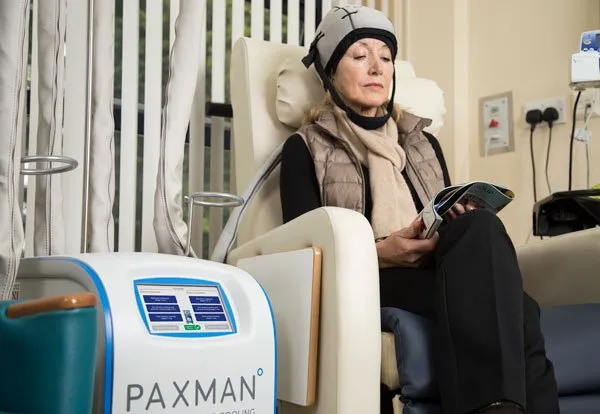
Hair loss is a common side effect of chemotherapy—and it can be one of the hardest parts of treatment. At the Lewis and Faye Manderson Cancer Center, scalp cooling with the Paxman Scalp Cooling System is available for certain patients to help reduce chemotherapy-related hair loss. Your oncology team can help you understand whether it’s a good fit for your treatment plan.
WHAT IS SCALP COOLING?
Scalp cooling (sometimes called a “cold cap”) uses a closely fitted, temperature-controlled cap to cool the scalp before, during, and after chemotherapy. Cooling the scalp may help protect hair follicles during treatment.
CLICK HERE TO SEE HOW IT WORKS
Chemotherapy can affect fast-growing cells, including cells in hair follicles. Paxman explains that cooling the scalp may help by reducing blood flow in the scalp and lowering follicle activity, which can reduce how much chemotherapy reaches hair follicles.
CLICK HERE TO SEE WHAT TO EXPECT
Scalp cooling adds time to your infusion visit because the Paxman cap is worn before chemotherapy begins, stays on during treatment, and continues for a period afterward. Your care team will confirm whether scalp cooling is appropriate for your treatment plan and ensure the cap is properly fitted, which is an important part of the process. While results vary, many patients find it helpful to talk through expectations early—ideally before the first infusion—so they can plan ahead and feel prepared on treatment day.
HOW TO GET STARTED
If scalp cooling is something you’d like to consider, talk with your oncology team at Manderson Cancer Center. We’ll review your treatment plan, discuss what to expect, and help you decide next steps.
Call 205-759-7800 to ask about scalp cooling at the Lewis and Faye Manderson Cancer Center.